
How many restrooms does a race need?
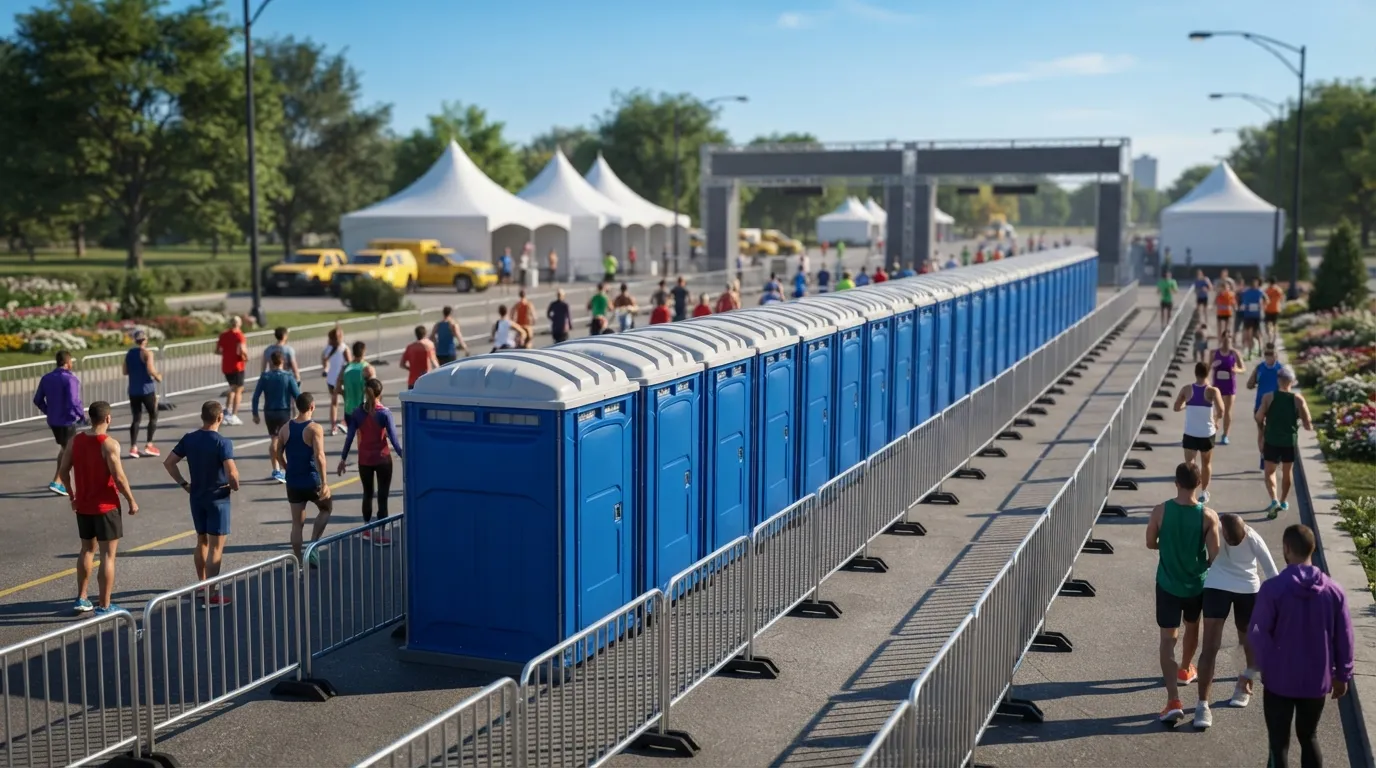
Start with the field size, then work backward. OSHA 1926.51(c) sets construction ratios, not race ratios, but race organizers use it as a rough baseline anyway: 1 toilet for smaller crowds, scaling up fast as headcount climbs. For a marathon with staggered corrals, put units at the start line, at least one cluster near mile 6 to mile 8, and a bigger bank at the finish festival. Plano Porta Pros sizes each cluster separately because runners queue differently at mile 10 than they do at the starting gun. A standard porta potty rental works for most course points. VIP tents, sponsor areas, or a finish line with a beer garden usually call for a deluxe flushable porta potty instead. Every cluster needs at least one accessible unit under ADA Standards 213.2, and that unit needs a 60 inch turning circle per ADA Standards section 304.3.1 so a wheelchair user can actually turn around inside. If your course runs through Plano and finishes near a park pavilion, ask about a restroom trailer rental for the finish line instead of a bank of standalone units; it handles heavier traffic in less footprint. Check our porta potty placement guide before you finalize your course map, since drainage and truck access both affect where a unit can actually sit.
Where do restrooms go on race day, and how does power fit in?
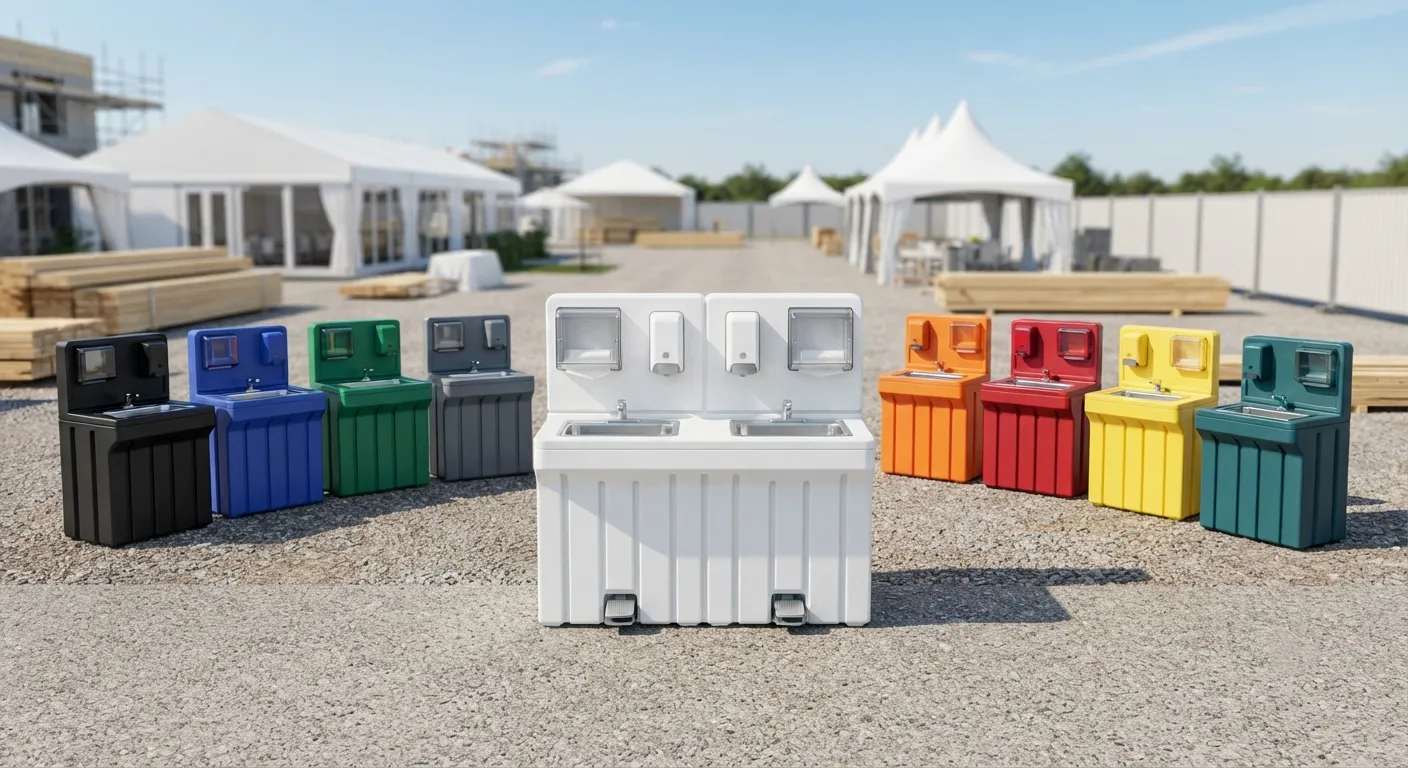
Placement follows the same rules as any outdoor event: firm level ground, a clear service path, and no blocking of emergency lanes. ADA Standards section 302.1 requires the ground under and around accessible units to be stable, firm, and slip resistant, which rules out soft turf or loose gravel for those units specifically. Standard units are about 44 by 48 inches on the ground and stand roughly 92 inches tall, so tuck them along fence lines or under shade tents without eating into runner lanes. If your race needs lighting for a pre-dawn start or a finish line that runs past dusk, a light tower rental usually pairs with a temporary power pole for the timing tent and sound system. Bracing that power pole matters more than people expect: set the base plate on level ground, guy-wire it at two or three points away from foot traffic, and keep the wire runs clear of the course itself so nobody catches a toe on race morning. Knowing how to brace a temporary power pole properly, with guy wires anchored well clear of the runner lane, keeps it standing through wind gusts and a crowded finish chute alike. A licensed electrician should confirm the amperage before load-in, since timing equipment, speakers, and food vendor trailers can stack up fast on one circuit. Pair your restroom order with handwashing station rental units at food vendor rows; 29 CFR 1910.141(d)(2) requires soap and towels or a hand-drying device at wash stations, not just sanitizer, so plan for a real unit rather than a gel pump. For races that draw runners from Allen, 7.7 miles northeast of Plano, or McKinney, 14.4 miles northeast, expect regional traffic to add crowd size fast, which pushes your restroom count up a tier.
What does a marathon restroom order cost?
Pricing depends on unit count, rental length, and whether you need trailers at the finish line. Most race organizers rent for a single event day, so use the day and weekend columns below rather than a monthly rate.
| unit | day | weekend |
|---|---|---|
| standard | $100 to $350 | $125 to $400 |
| ada | $200 to $400 | $199 to $300 |
| deluxe | $85 to $1,200 | n/a |
| trailer | $175 to $2,500 | $900 to $3,000 |
A delivery fee applies on top of the unit rate, typically $100 to $500 for a single-day event, and a service fee may apply if you need a mid-race pump-out for a long event weekend. Ask Plano Porta Pros for a full quote once you know your course layout; use the request a quote page to send your headcount and site map directly. If your event runs multiple days, compare the porta potty rental per day numbers against a monthly porta potty rental rate before you commit, since a three-day festival weekend can sometimes cost less per day at a weekly rate than three separate day rentals.
How far in advance should I book race restrooms?
Book as soon as your course map and headcount are set, ideally weeks out, since large weekend events compete for the same trailer inventory. Confirm delivery access at each cluster point, since a roll-off dumpster rental truck and a restroom delivery truck both need clear approach lanes near the finish line.
Do I need an accessible unit at every restroom cluster?
Yes. ADA Standards section 213.2 requires at least 5 percent of clustered units be accessible, and never fewer than one per cluster. That means your mile-6 water stop needs its own ADA unit, not just the start and finish areas.
Can Plano Porta Pros service units mid-race?
Yes, for longer events. High-traffic clusters near the finish line may need a mid-event pump-out, especially for all-day festivals layered onto the race. Ask about service frequency when you request your quote so nothing runs short by afternoon.
What size crew restroom do timing and volunteer tents need?
A single standard unit usually covers a small volunteer tent. Larger command posts with 15 or more staff should follow OSHA 1926.51(c) ratios and add a second unit plus a handwashing station nearby.
Should race day units differ from construction site units?
Not structurally. The same 60 to 70 gallon tank and standard footprint work fine. The difference is placement density: races need units spread along a course, not clustered at one gate like a construction site services job.
Next step
Get a delivery date
Tell us the address, the dates and the headcount. We size the order and confirm the route.