
What Does OSHA Require for Portable Toilets on a Construction Site?
OSHA portable toilet requirements for construction start with 1926.51(c), which sets the ratio: one toilet facility for 20 workers or fewer, then one toilet seat and one urinal per 40 workers once you pass 20, dropping to one per 50 workers at 200 or more. That is the number an inspector checks first. It is also the number most crews underestimate on a 15 to 18 worker job, where one unit still covers the crew under the "20 or fewer" line. If your site handles paints, coatings, herbicides, or insecticides, OSHA 1926.51(f)(1) kicks in separately and requires washing facilities for that contamination, not just a toilet. Plano Porta Pros sizes crews against both rules before quoting, and the OSHA Portable Toilet Requirements page breaks the ratio down further if you are bidding a job with a swinging headcount. For sites doing repeated exterior coating work, pair the toilet order with a handwashing station rental rather than assuming a single unit covers both jobs.
There is no separate Cal OSHA portable toilet requirements construction standard that applies here. Texas jobsites fall under federal OSHA 1926.51(c), and that is the standard Plano Porta Pros builds every site quote against, whether the crew is local or working a job that also has a California-based general contractor asking about compliance on paper.
How Much Does Portable Toilet Rental Cost for a Construction Site?
Portable toilet rental for construction sites cost runs $100 to $350 a day, $130 to $500 a week, or $125 to $325 a month, and most construction jobs land on the week or month rate once the schedule firms up. Delivery adds a separate line, typically $50 to $150 for a weekly setup. A crew of six on a two-month remodel is a different order than a 40-person commercial build needing four or five units under the 1926.51(c) ratio, so pricing depends on unit count as much as duration.
| duration | typical range |
|---|---|
| day | $100 - $350 |
| week | $130 - $500 |
| month | $125 - $325 |
Longer terms cost more in total but less per day, which is why most Plano contractors lock in a month rate rather than renewing weekly. The Porta Potty Rental Cost page has the full breakdown by unit type, and Monthly Porta Potty Rental covers what changes when a job runs past 30 days. If you just need day-rate numbers for a bid, Porta Potty Rental Per Day has those isolated. For crews that want everything - toilets, a dumpster, maybe a fence line - bundled into one delivery, ask for a combined quote instead of pricing each piece separately.
What Else Does a Construction Site in Plano Need Besides Toilets?
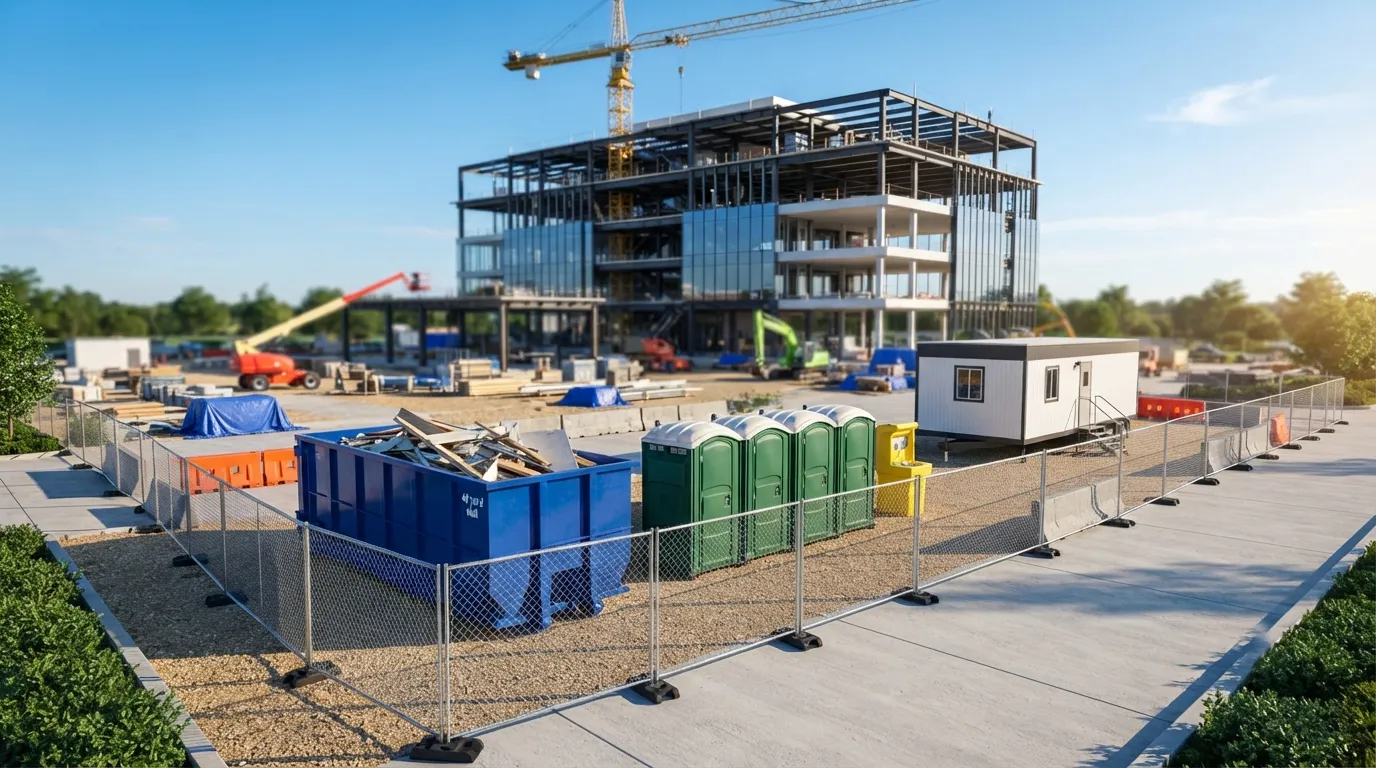
Most sites need a dumpster, and often fencing or a storage container, alongside the toilet order. A roll-off delivery needs about 60 feet of straight clearance behind the truck, so tell us before delivery day if your Plano lot is tight or if the alley access is shared with another trade. Dumpster day rates run $51 to $112, with weekly service landing between $426 and $778 depending on size and haul frequency. The Roll-Off Dumpster Rental page covers the 10, 20, 30, and 40 yard options, and Dumpster Weight Limits is worth reading before you fill one with concrete or shingles, since overage fees are common there.
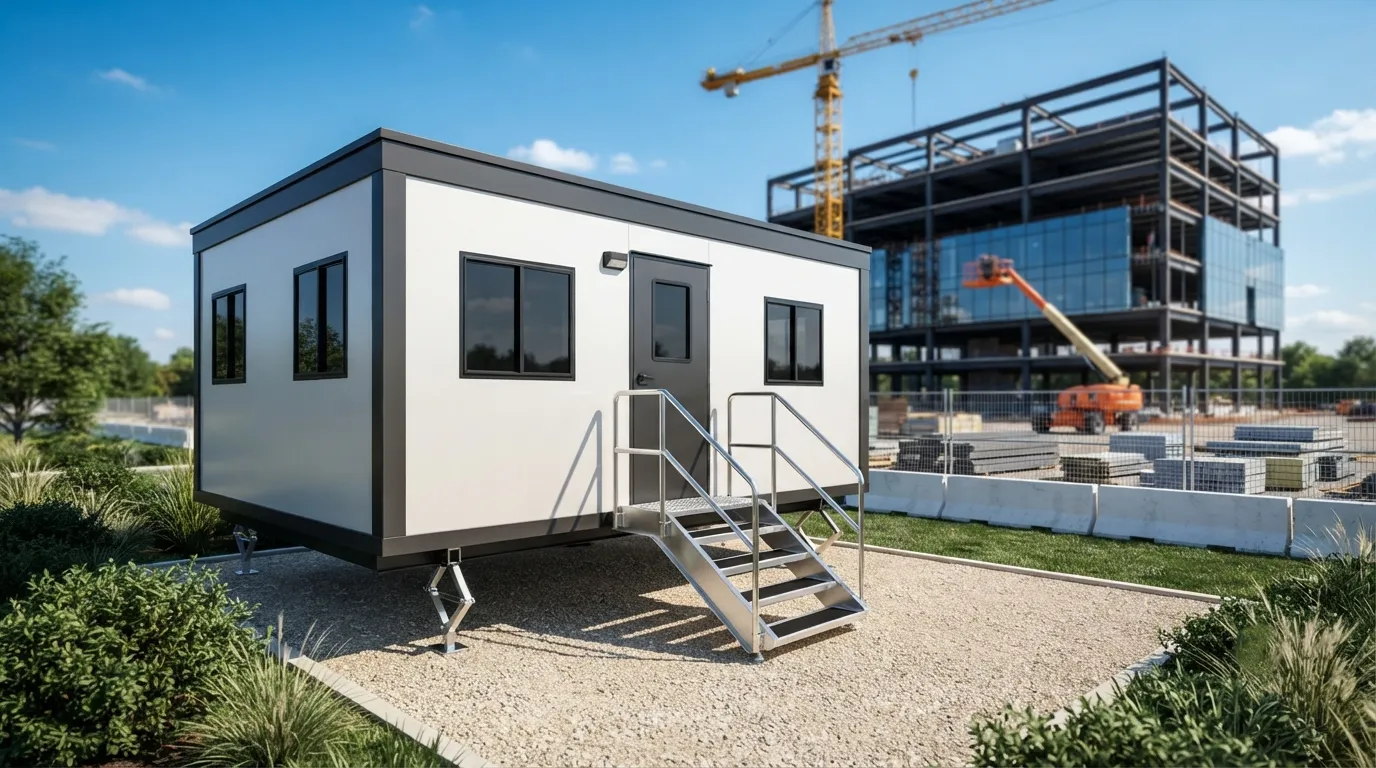
Housekeeping under OSHA 1926.25 requires scrap and debris cleared from work areas, which is the regulatory reason most GCs order a dumpster on day one rather than waiting for the site to get messy. If the job needs security or crowd separation, a temporary fence rental runs $30 to $75 a day, and chain link temporary fence is the standard choice for a Plano perimeter. Crews running a jobsite trailer or tools that need lockup between shifts often add a storage container rental, priced from $100 to $250 a month. For night work or winter shifts with short daylight, pair the sanitation order with a light tower rental so the site meets OSHA 1926.56(a) illumination minimums.
How Do I Know How Many Units My Plano Job Needs?
Count your peak crew size, not your average, and apply the 1926.51(c) ratio to that number. A 12-person framing crew needs one unit. A 45-person crew crossing multiple trades needs at least two toilet seats plus a urinal under the 40-worker tier, and that count climbs again once the job passes 200 workers on a large commercial build. The How Many Porta Potties Do I Need guide walks through the math with worked examples, and it is worth checking before you submit a bid so the sanitation line item is not a guess.
Placement matters as much as count. Units need a stable path for the pump truck, and OSHA 1926.202 governs any barricades used to protect workers near excavation or equipment lanes close to the units. The Porta Potty Placement Guide covers ground conditions and clearance. Plano job sites near Allen, roughly 7.7 miles northeast, or Murphy at 10.5 miles east, get the same delivery terms and same-day service window as sites inside city limits; McKinney, 14.4 miles northeast, and Carrollton, 12.8 miles southwest, are also inside our regular route. If your project is genuinely remote or the schedule is compressed, ask about emergency porta potty rental rather than assuming next-day delivery is guaranteed.
How many portable toilets does a construction site need?
One unit covers up to 20 workers under OSHA 1926.51(c). Above that, add a toilet seat and urinal per 40 workers, dropping to one per 50 once headcount passes 200. Peak crew size, not average daily headcount, is the number to use when ordering.
Does a small renovation job need the same toilet ratio as a big commercial site?
Yes, the OSHA 1926.51(c) ratio applies regardless of project size. A six-person remodel crew still needs a compliant unit on site. Check Home Renovation Porta Potty for guidance sized to smaller residential jobs in Plano.
Can I rent a dumpster and portable toilet together for one delivery?
Yes, most Plano contractors order both on the same delivery to save a second trip fee. Ask for a combined quote covering the toilet, the roll-off, and any fencing so delivery costs are not charged twice.
What is the difference between a standard unit and an ADA unit for a jobsite?
A standard unit is about 44 by 48 inches on the ground and 92 inches tall. An ADA unit meets ADA Standards 213.2, requiring at least one accessible unit where units are clustered, plus a 60 inch turning circle inside per ADA Standards 304.3.1.
Do portable toilets need handwashing stations next to them on a construction site?
Not automatically under 1926.51(c), but 29 CFR 1910.141(d)(2) requires soap and towels wherever washing facilities exist, and 1926.51(f)(1) requires washing where paints, coatings, or pesticides are used. Add a station if your crew handles those materials.

Next step
Get a delivery date
Tell us the address, the dates and the headcount. We size the order and confirm the route.